
The Ultimate Guide to Pitching and Negotiating
February 18, 2026
Pitching and negotiating are two of the most important skills in business.
Whether you want to win investment, secure new clients or close a partnership, you need to pitch clearly and negotiate confidently to get the outcome you want.
When you pitch well, you help people understand the value you bring. When you negotiate well, you protect that value and agree terms that work for both sides.

Meet the Author: Benjamin Ball
Ben is the founder of London-based Benjamin Ball Associates and leads the presentation coaching and pitch deck creation teams. Formerly a corporate financier in the City of London, for 20+ years he’s helped businesses win with better pitches and presentations, particularly investor pitches. He is a regular speaker and a guest lecturer at Columbia Business School and UCL London. Follow Ben on LinkedIn or visit the contact page.
What Will You Get From This Guide?
This guide brings these two skills together. It shows you how to build a pitch that stands out, how to deliver it with confidence, how to answer questions under pressure and how to negotiate once the pitch is over. You will also find examples, videos and practical tools based on years of coaching senior leaders, founders and investment teams.
If you want a quick starting point, try these resources:
Everything in this guide is based on the experience of the team at Benjamin Ball Associates. We’ve been coaching leaders and teams to pitch and present more effectively. If you want to improve your pitching and negotiating skills, please get in touch. We’d be glad to discuss how we can help you.
Get a free quote. Speak to an expert
PART 1 — MASTERING THE PITCH
Great pitching is not about charisma. It is about clarity and relevance. You need a simple message, a strong narrative and the confidence to help people see why your offer is right for them. The best pitchers understand what their audience cares about, then match their pitch to those priorities.
Below, you will find the essential steps to create and deliver a persuasive pitch.
1. What Makes a Persuasive Pitch
Every persuasive pitch has three things in common:
It is simple
People cannot remember complicated messages. The most effective pitches use clear language and a simple story. If you want guidance on this, see Secrets of a Compelling Pitch for Investors.
It has a strong narrative
Great pitchers don’t just list facts. They use a narrative that helps people understand why they should care. If you want examples of how stories change the way people listen, explore How to Use Business Storytelling.
It blends logic, credibility and emotion
People are persuaded by more than facts. 2500 years ago, Aristotle outlined the three classic appeals that you need to create a persuasive argument. These are:
- Logos (logic)
- Ethos (credibility)
- Pathos (emotion)
You can read more about these tools in Three Persuasive Appeals: Logos, Ethos, Pathos.
It feels relevant
Investors and clients want to know “why you” and “why now”. If they don’t feel that relevance, they move on. If you pitch to private equity, see Great Private Equity Pitch.
2. Build a Pitch That People Understand
Your pitch only works when your audience gets it. That means stripping out jargon and making your message easy to repeat.
Know what investors care about
Investors want to understand your market, team, traction and numbers. A helpful overview is here:
What Investors Look For in a Pitch Deck.
Tailor your message
A pitch that works for a VC won’t necessarily work for a family office. You need to adjust your examples, evidence and ask. Learn how here:
Tailor Your Pitch for Different Investors.
Use the right messages for each investor type
Private equity firms want a business they can help scale with predictable cash flows. VCs want a business that can grow fast. Corporate investors want strategic fit. If you are pitching to VCs, start with:
How to Pitch to Venture Capital. If you are a private equity fund pitching to LPs, then read How to pitch a private equity fund to LP investors. If you are a mid-market PE firm, then read 8 tips for a winning mid-market private equity pitch.
For general message improvement, explore:
How to Create Persuasive Investor Pitches.
3. Your Pitch Deck: Structure and Story
A strong deck helps people understand your message quickly. It does not replace you, but it supports you.
Follow a proven structure
A good starting point for any investor pitch is:
- Problem
- Solution
- Market
- Traction
- Business model
- Team
- Ask
You can dig deeper into structure here:
Look at strong pitch deck examples
See what good looks like here:
Test your deck with an audit
You can find expert guidance here:
Investor Pitch Deck Audit.
If you need help writing the deck
Case studies that show what works
4. Deliver Your Pitch With Impact
Slides don’t win pitches. Delivery does. In your pitch meeting, you want to create a feeling of partnership. You must care as much about them as you want them to care about you. You also should sound confident, helpful and relaxed.
Start strong
Your opening lines sets the tone. Practise this until it feels natural. Read how to start a presentation with impact.
Use your voice well
Pace, tone and pauses matter. If you rush, you sound unsure. Learn how to master presentation delivery.
Make your message memorable
Good delivery beats fancy slides. Learn how to write great messages for your investor pitch.
Useful resources:
- Speak to Investors With Impact
- Structuring Your Talk
- How to Create a Killer Investor Pitch Deck
- How to Create a Stand-out Investor Pitch
- How to Create a Stand-out New Business Pitch
5. Pitch Types and When to Use Them
Different situations need different pitches.
Elevator pitches
Short and sharp. See:
Five Tips for a Great Elevator Pitch.
Investor pitches
Clear and evidence-led.
Useful links:
Professional services pitches
Clients want a clear, confident pitch with a simple explanation of your value.
See:
Support for Professional Services Firms.
Internal leadership pitches
Useful for HR and L&D teams:
Support for HR & L&D Teams.
6. Handling Questions After Your Pitch
Questions tell you what people really care about. They also test your credibility.
Stay calm and listen
Most mistakes happen because people rush. Learn how to improve your listening here:
Improve Active Listening Skills.
How to answer questions confidently
See:
Don’t guess
If you don’t know the answer, say so. Then explain how you will get the information.
7. Avoiding Common Pitching Mistakes
Most pitches fail for predictable reasons.
The biggest mistakes include:
- Too much detail
- Weak narrative
- Overloaded slides
- Unclear ask
- No preparation
- Defensive answers
You can explore common mistakes here:
- Investor Presentation Pitch Deck Mistakes
- How to Avoid Mistakes in Investor Pitches
- Your Investor Pitch Readiness Guide
8. Rehearsing Your Pitch Properly
Rehearsal is the biggest difference between good pitchers and great ones.
Rehearsing alone
Practise out loud. Time yourself. Record yourself.
Rehearsing with others
Ask someone to challenge you with tough questions.
Useful guides:
- How to Rehearse an Investor Pitch
- Roadshow Training and Coaching
- Coaching in Financial Services
- Pitch Coach
Real example
See how remote coaching helped a team sharpen their pitch:
Venture Scotland Case Study.
PART 2 — NEGOTIATING WITH CONFIDENCE
A strong pitch sets the stage for negotiation. You want the other side to understand your value so the negotiation begins from the right point.
This section helps you negotiate with confidence, stay calm under pressure and achieve terms that work for you.
9. How Pitching Sets Up Your Negotiation
Your pitch influences your negotiation power. When your message is clear, you negotiate from a stronger position.
Why this matters
- A clear pitch anchors your value
- A simple story reduces pushback
- Strong delivery builds credibility
- Confidence early helps you later
Read how to create a compelling new business pitch.
10. Preparing for a Negotiation
Preparation is the foundation of any good negotiation.
Know your priorities
Decide what matters most and what you can compromise.
Plan your questions
Good questions reveal what the other side values.
Use pitch messages as anchors
Your negotiation should reinforce, not contradict, your pitch. You can read more about how to prepare for a negotiation here.
11. Negotiating With Investors
Investor negotiations usually include:
- Valuation
- Equity
- Terms
- Governance
- Timelines
How to approach these conversations
- Avoid over-explaining
- Don’t rush into numbers
- Pause before you answer
- Use evidence from your pitch deck
- Keep the tone relaxed
Read more about how to negotiate in this blog article. And how to prepare your business for sale here.
12. Negotiating With Clients and Buyers
Negotiation follows almost every sales pitch.
You may need to discuss:
- Price
- Scope
- Timelines
If you want help persuading buyers, try:
How to Persuade Customers to Buy – 10 Top Tips.
13. Communication Skills for Negotiation
Strong negotiation relies on strong communication.
Skills that help you
- Pausing
- Listening properly
- Framing your answers
- Using simple, confident language
- Keeping a calm tone
Useful resources:
14. Common Negotiation Mistakes
People often weaken their position without realising it.
Mistakes to avoid
- Talking too much
- Showing your walk-away point early
- Losing message discipline
- Giving concessions quickly
- Getting emotional
Negotiation improves when you stay calm and keep your answers short.
15. Examples and Case Studies
Real stories help you see what works.
Case studies to explore
Both cases show how clarity in the pitch makes negotiation easier.
Conclusion
Pitching and negotiating are learnable skills. If you want to improve quickly, start by simplifying your message. Then rehearse out loud, sharpen your delivery and prepare for the negotiation that follows.
You’ll find further support here:
When you pitch clearly and negotiate confidently, you give yourself the best chance of success. If you want help preparing for an important pitch or negotiation, expert coaching makes a big difference.
Next Steps to Better Pitching
Nobody was born a good negotiator or was good at pitching before learning how. You can learn these skills — and with support, you can learn fast.
At Benjamin Ball Associates, we can help you:
- Prepare compelling pitches
- Pitch confidently and persuasively
- Prepare for high-stakes moments
- Build authority and presence
- Get the best from negotiations
If you’d like to improve your pitching & negotiating, start with a short conversation.
We’ll talk through your goals and suggest the right next step.
Get a free quote. Speak to an expert
Why Choose Us:
Transform your pitches and presentations with tailored coaching

We can help you present brilliantly. Thousands of people in the UK, Europe and the Middle East have benefitted from our tailored in-house coaching and advice – and we can help you too.
“I honestly thought it was the most valuable 3 hours I’ve spent with anyone in a long time.”
Mick May, CEO, Blue Sky
For 15+ years we’ve been the trusted choice for leading businesses and executives throughout the UK, Europe and the Middle East. We’ll help you improve corporate presentations through presentation coaching, public speaking training and expert advice on pitching to investors.
Some recent clients

Unlock your full potential and take your presentations to the next level.
Speak to Louise on +44 20 7018 0922 or email info@benjaminball.com to transform your speeches, pitches and presentations.
Get a free quote. Speak to an expert
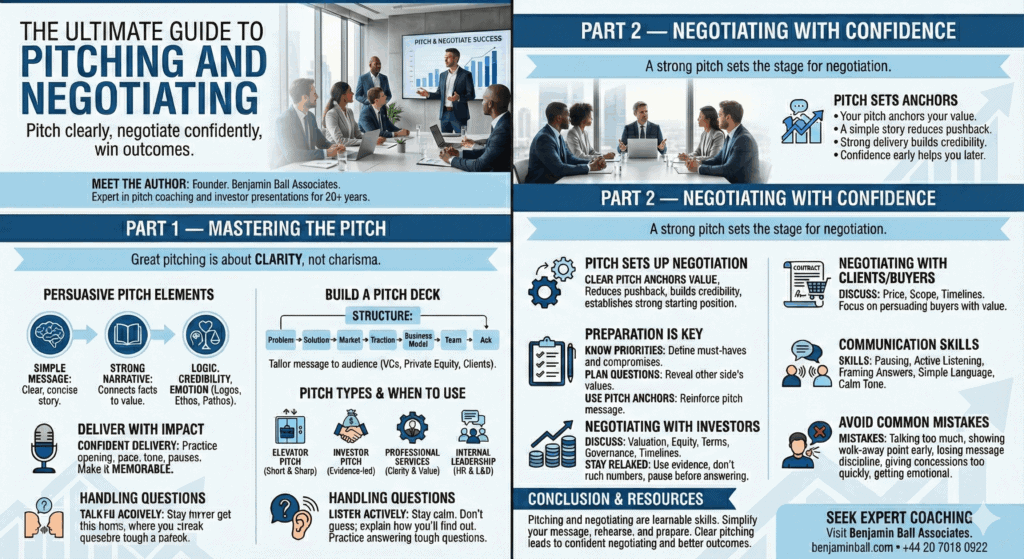
Table of Contents
Contact us now for free consultation
Start improving your pitches and presentations now
Contact us now and speak to an expert about getting award-winning coaching, training and advice