
Select Committee Training: How to Prepare to Give Evidence
November 18, 2026
When you give evidence to a parliamentary select committee, it isn’t easy, even if you’re an experienced senior leader. That’s because you’re answering questions, usually on camera, and the MPs on the committee may have their own agendas they want to promote.
When you prepare well, it’s easier to make a positive impact. For example, a poor answer might end up on the news and be on the record for years.
Learn how select committee training can help you.

Meet the Author: Benjamin Ball
Ben is the founder of London-based Benjamin Ball Associates. He leads the presentation coaching and pitch deck creation teams. Formerly a corporate financier, for 20+ years he’s helped businesses pitch, present & persuade. He is a guest lecturer at Columbia Business School, Imperial College and UCL London. Follow Ben on LinkedIn or visit the contact page.
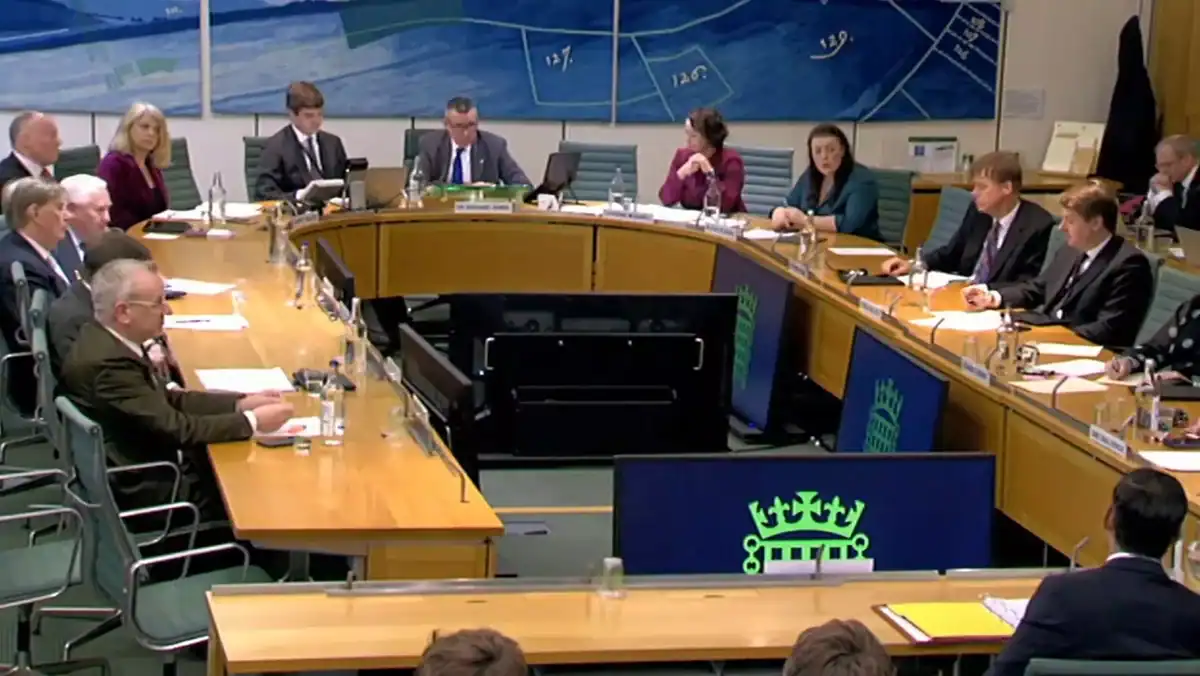
In 2025, executives from fast-fashion retailer SHEIN were called to give evidence at the Business and Trade Committee. Afterwards, they were criticised because they were seen as not addressing MPs’ concerns.
So, what should you expect, and how can you prepare? Let’s start with how a select committee works.
How does a select committee work?
At its simplest, Select Committees are cross-party groups of MPs or peers who scrutinise government policy and investigate issues of public concern.
In the House of Commons, you will find a committee for each major government department, plus others such as the Public Accounts Committee and the Treasury Committee. A typical committee has 10 to 12 members.
Committees run inquiries on specific topics. They call for written evidence and then invite witnesses to give oral evidence in sessions that are open to the public and press.
Who gets called to give evidence?
Witnesses can include ministers and civil servants, but, most importantly for us, also chief executives, regulators, industry bodies, charities, academics and other experts.
Committees often call up business leaders when their sector is in the news, after a crisis, or when a committee examines issues such as consumer protection, pay, safety or competition. Just read the newspaper, and you’ll see the noise generated when a senior leader is called up.
Most witnesses attend by invitation. Committees also have powers to require attendance (rarely used).
How an evidence session works
Before the session
Your main contact is the committee clerk. The clerk will confirm the date, explain the format and tell you who else is giving evidence. Frequently, they can outline the areas the committee intends to cover. Committee staff also prepare a briefing for members, including suggested questions.
You may be asked to send written evidence before the session, which helps members prepare their questions, so prepare carefully.
During the session
A typical session lasts one to two hours and is often broadcast and transcribed. You could be part of a panel, sharing the table with witnesses from other organisations.
The chairperson will open the session and invite members to ask questions. Remember, MPs may have their own agendas, and many will be looking for the killer question or soundbite that could get picked up in the news. Many love a ‘gotcha’ question.
After the session
Afterwards, you’ll get an uncorrected transcript and can usually correct factual inaccuracies. If you’ve promised to send more information, you should do so promptly, in writing. The committee may quote your evidence in its final report, even if that is months later.
Get a free quote. Speak to an expert
How to prepare for a Select Committee: 8 steps
1. Understand the inquiry
Start by getting familiar with the inquiry’s terms of reference. Then, read the written evidence and watch any previous sessions. What hobby horses does each member ride? Is ti clear what is the committee is looking for? What direction does it seem to be heading?
2. Research the members
Find out who’s on the committee and what they’ve said about you, your organisation, your sector or the issue. Review their constituency interests, recent comments in the media, and their style of questioning. Like this, you’ll get a better sense of the questions you’re likely to face.
3. Work with the clerk
Talk to the clerk early. Ask them about timings, the format of the day, who the other witnesses are and which topics members want to explore. Clerks want the session to run well, and their guidance can be practical and useful.
4. Agree your key messages
Key preparation for you is to agree the main points you want the committee and the public to understand. Think about messages that will land, not detailed explanations. Use this preparation to keep your answers clear, short and interesting. We recommend using a message house as a useful way to organise your thinking and messaging.
5. Prepare for the hardest questions
Essential preparation is to write down the questions you’d least like to be asked. While you might not get asked, if you have thought them through, you’ll be better prepared than most. For each question, prepare short answers. Use stories, data points and examples to bring your answers to life. And remember to tie back to individual interests in the committee. .
6. Know your facts, and your limits
Know what you can and can’t discuss, (e.g. commercially sensitive or legally restricted information). If you can’t answer a question, work out beforehand how you’ll explain why. Your coach can help with this.
7. Rehearse with a mock committee
We strongly recommend a full-length rehearsal with colleagues or external coaches playing committee members. Ask them to push back, challenge your answers and follow up on difficult points. Record it and watch it back. Where did you hesitate, talk for too long or leave a question unanswered? Which soundbites will get picked up? What points did you land strongly? Where are your weak spots?
8. Coordinate with your communications team
Remember what might happen afterwards. You may see clips on social media and on the news. Work out who’ll deal with press enquiries, what the line is and what you’ll tell staff.
Get a free quote. Speak to an expert
Case study: Helping a charity CEO make the case to MPs
The challenge: The CEO of Action Tutoring, an education charity that trains volunteers to tutor pupils facing disadvantage in English and maths, was invited to give evidence to the Education Select Committee. Her first draft talked about the charity and the good work it does helping pupils pass exams. It was a worthy story, but it didn’t tell MPs what to do.
What we did: We helped her simplify the story to a single, clear argument: a small increase in government funding for tutoring could make a big difference to exam results, and to the UK economy. We then rehearsed her answers so she could make that case concisely under questioning.
The result: She gave MPs a clear message linked to a policy decision. A few weeks later, the government announced a major increase in its support for in-school tutoring.
On the day: how to answer questions
You can read a few articles we have written about media training and how to answer tough questions. Here are a few tips specifically for Select Committees.
Answer the question first
Get your answer out first, then explain it. The brain responds well to clear, confident answers. If you can’t answer, say why. Beware of the common mistake of jumping directly to a prepared message.
Keep answers short
The committee will appreciate brevity and conciseness. Long answers use up time, make you sound evasive and increase the chance of interruptions. Typically, aim for 30 to 60 seconds to answer most questions. Follow-up questions from members are good things.
Stay calm under pressure
Be conscious of a combative question. It could just be a grandstanding MP looking for a fight and a new clip. Take a moment, address the concern and answer calmly. If you’re asked again, keep your tone steady.
Show you understand the concern
When the committee is looking at a problem you have faced, be empathetic. For example, if customers, staff or members of the public have been harmed, acknowledge it early. Talk about what it means for them and what you have done since to make things better.
Be careful with facts and commitments
Be precise. Don’t guess. If you don’t know, say so and offer to follow up in writing. NB: commitments made on the record will be checked.
Remember the wider audience
While you are in the room speaking to the committee, your real audience is the media, your staff, customers and investors. That means following all the rules of public speaking and media training. e.g. avoid jargon, speak clearly and assume anything you say could become a headline. Our media interview tips apply here too.
Common select committee mistakes to avoid
These are some of the common mistakes that unprepared people make:
- Giving evasive or scripted answers that sound as if they were written by lawyers or PR advisers.
- Overly long answers that waste time and irritate the committee.
- Arguing with members or showing frustration.
- Inaccurate facts or figures that you must correct later, which undermine your credibility.
- Not knowing the brief on issues the committee clearly considers important.
- Not preparing for this as a high-profile, public, political event.
- Inadequate rehearsing, leaving you unprepared for the tough questions.
How does select committee training work?
Select committee training turns the eight steps above into a structured programme, led by coaches who ask you the questions. We tailor all our programmes so you get exactly the support you need. Your programme may include some or all of these steps.
- Briefing. We ask you about the inquiry, your position, what the risks are and what you want to achieve. We can review your written evidence, the terms of reference and earlier sessions, if any exist.
- Committee research. We encourage you to look at each member’s interests, past questioning and public statements, so we can predict who is likely to ask what, and in what tone. It’s always good to identify potential troublemakers up front.
- Develop messages. We work with you to agree on a small number of clear messages and the evidence to support them. More on this below.
- Question bank. With you, we build a list of the questions you are most likely to face, including the ones you hope nobody asks, and develop short, clear answers that you can practise.
- Mock committee sessions. Our coaches will play the chair and members, from the friendly to the openly hostile, and question you. We’ll record these and analyse them with you, so you can see yourself as others will.
- Feedback and repeat. After each preparation session, we identify what changes are needed and run it again. Most people improve sharply between the first and second sessions.
- Final run-through. We can run a short session a day or two before the event to rehearse your opening, incorporate the latest news, and prepare for the hardest questions.
We can run this training one-to-one or in a group for a panel of witnesses. You can have this in-person or online.
Tighten your messaging
What we regularly see is that most witnesses arrive with too much to say. Because they know their subject in detail, they want to share that understanding. But, just as when preparing for a media interview, you need to be tight, targeted and clear on exactly what you want to achieve.
Strong select committee messaging has three features:
- It is short. Two or three messages, each one sentence long, that you can say in just a few seconds.
- It is about the committee’s concerns, not yours. MPs care about the public, their constituents and value for money. That means your messages need to address these issues.
- It asks for something, or explains something. The best messages tell the committee what should happen next, or what they need to understand to reach the right conclusion.
Test every message with the So What test: if an MP or journalist heard it, would they know why it matters to the people they represent? If not, keep working on it.
Prepare stories and examples
Messages tell the committee what you think. Stories and examples make them believe it. A single real case is often what MPs quote in their questions, in the media and in the committee’s final report.
Prepare a small bank of examples before the session:
- A human story. One person your organisation has helped, or one customer affected by the issue.
- A number that sticks. One or two figures that sum up the scale of the problem or the impact of your work.
- A comparison. Put a figure in context: “That’s more than the annual budget of…”, or “For the cost of one…, we could…”.
- A local example. If you can, find an example from a committee member’s constituency or region.
- A proof point for your plan. Evidence that what you are proposing works: a pilot, an evaluation or a result elsewhere.
Attach each example to one of your key messages, so you know which story to use when a question opens the door. Practise telling each one in under 30 seconds. Our guide to storytelling in business presentations has more on structuring a short, memorable story.
One caution: never embellish. Every example you use is on the record.
Help preparing for your appearance
Knowing your facts is one thing. Explaining them clearly while you’re being challenged in public takes practice. A rehearsal lets you work on both before the session.
At Benjamin Ball Associates, we have spent more than 15 years helping senior leaders prepare for difficult questions, from investor Q&A to media interviews and crisis communications.
We have coached leadership teams at a UK financial regulator, and our executive media training and crisis media training include realistic mock sessions with questions that reflect the committee’s concerns. We work in strict confidence and at short notice.
To talk through your select committee training, contact Louise Angus, our Client Services Director, on +44 20 7018 0922 or email info@benjaminball.com.
Get a free quote. Speak to an expert
Why Choose Us:
Transform your pitches and presentations with tailored coaching

We can help you present brilliantly. Thousands of people in the UK, Europe and the Middle East have benefitted from our tailored in-house coaching and advice – and we can help you too.
“I honestly thought it was the most valuable 3 hours I’ve spent with anyone in a long time.”
Mick May, CEO, Blue Sky
For 15+ years we’ve been the trusted choice for leading businesses and executives throughout the UK, Europe and the Middle East. We’ll help you improve corporate presentations through presentation coaching, public speaking training and expert advice on pitching to investors. And we stand out because you benefit from our tried and tested PitchPointTM Process to make sure you make fast and lasting improvements.
Some recent clients

Unlock your full potential and take your presentations to the next level.
Speak to Louise on +44 20 7018 0922 or email info@benjaminball.com to transform your speeches, pitches and presentations.
Get a free quote. Speak to an expert
Select committee FAQs
Will I be told the questions in advance?
Not usually, though the clerk can often share the main topics. Be ready for questions about anything connected to the inquiry or your organisation’s recent record.
How long does a select committee session last?
Most oral evidence sessions last between one and two hours, often split between several panels of witnesses. You may be questioned for anything from 30 minutes to the full session.
Can I bring notes?
Yes. A few notes with key facts and figures are helpful. Just don’t read out a prepared answer: that looks and sounds evasive.
How far in advance should I prepare?
Start when the invitation arrives. You may have only a few weeks before the event, so leave time for enough rehearsals, preparing your evidence, and dealing with tough questions.
What if I make a mistake in my evidence?
Write to the committee directly. Explain what you got wrong and give the correct information.
What you should do next
- For more articles like this, subscribe to our fortnightly newsletter
- Download some of our free expert guides
- Get in touch and discuss how our intensive presentation coaching and public speaking training courses can help you.
Call our client services director Louise Angus on + 44 20 7018 0922 or email info@benjaminball.com
Get a free quote. Speak to an expert


Contact us now for free consultation
Start improving your pitches and presentations now
Contact us now and speak to an expert about getting award-winning coaching, training and advice